



Meditation is one of humanity’s oldest technologies of awareness. Practised for thousands of years across cultures and spiritual traditions, it offers a simple yet profound way to quiet the mind and reconnect with the deeper intelligence of the present moment.
In today’s fast-paced world, where stress and distractions are constant companions, meditation offers a sanctuary for the mind. Within its stillness, awareness deepens, clarity emerges, and a sense of inner harmony begins to unfold.
Both ancient wisdom traditions and modern scientific research increasingly affirm what practitioners have long known: meditation nurtures the mind, balances the body, and opens the door to deeper insight. By cultivating presence and attention, this timeless practice reveals the transformative potential that lies within every moment of awareness.
Reducing Stress and Anxiety
One of the most widely recognised benefits of meditation is its ability to reduce stress. When the body encounters pressure or uncertainty, it releases cortisol, a hormone associated with the stress response. Elevated cortisol levels over time can contribute to anxiety, sleep disturbances, and a range of health challenges.
Meditation gently interrupts this cycle. By bringing attention to the breath and the present moment, the nervous system begins to shift from a state of reactivity into one of calm and restoration. Research consistently shows that individuals who practise meditation regularly experience measurable reductions in stress-related symptoms, along with greater emotional resilience.
Over time, meditation cultivates a sense of spaciousness within the mind. Challenges may still arise, but they are met with greater steadiness and perspective.
Enhancing Emotional Well-Being and Self-Esteem
As the mind grows quieter, deeper emotional transformations begin to unfold. Meditation fosters a heightened awareness of thoughts and feelings, allowing individuals to recognise patterns that might otherwise remain unconscious.
Through this gentle observation, negative self-perceptions gradually lose their grip. Self-compassion grows in place of self-criticism, and a deeper sense of self-acceptance begins to take root.
Studies exploring mindfulness-based practices have shown that regular meditation can significantly improve emotional wellbeing and self-esteem. By cultivating presence and kindness toward oneself, meditation encourages a more balanced and compassionate relationship with the inner world.
Preventing and Managing Depression
Depression is often sustained by cycles of repetitive negative thinking. Meditation helps interrupt these cycles by training the mind to observe thoughts rather than becoming entangled in them.
Mindfulness-based approaches have increasingly been used as therapeutic tools for managing depression. Research has shown that individuals who integrate meditation into their lives may experience lower relapse rates compared to those relying solely on conventional treatments.
By creating space between awareness and thought, meditation allows emotions to arise and pass naturally. In this way, the practice encourages greater emotional stability and resilience.
Improving Focus and Attention
In a world of constant notifications and digital stimulation, the ability to focus has become increasingly valuable. Meditation strengthens this capacity by training the mind to return again and again to a single point of attention.
Scientific studies have demonstrated that individuals who engage in regular meditation practice often experience improvements in concentration, cognitive flexibility, and mental clarity.
Rather than allowing attention to scatter across countless distractions, meditation cultivates a steady awareness that supports clearer thinking, more effective decision-making, and deeper engagement with the present moment.
Enhancing Sleep and Combating Insomnia
Restful sleep is essential for both physical health and emotional balance, yet many people struggle with restless nights and overactive minds.
Practices that restore presence are appearing across many cultures. Forest immersion traditions such as Shinrin-Yoku, explored further in Shinrin-Yoku: The Art and Science of Forest Bathing for Mindful Wellbeing, demonstrate how nature itself can become a powerful environment for cultivating mindfulness and inner calm.
Meditation promotes relaxation by calming the nervous system and softening the mental chatter that often interferes with sleep. Practising meditation before bedtime can help ease the transition from activity to rest, allowing the body and mind to settle naturally.
Research suggests that individuals who incorporate meditation into their evening routines often experience improved sleep quality and fewer nighttime awakenings. Through gentle awareness and breath, meditation restores the body’s natural rhythm of rest and renewal.
Regulating Emotions and Managing Pain
Meditation also influences how the brain processes both emotional and physical discomfort. Rather than reacting immediately to unpleasant sensations, the practice encourages mindful observation.
Studies have shown that experienced meditators often demonstrate greater tolerance for physical pain, as well as improved emotional regulation. By observing sensations with curiosity rather than resistance, individuals develop a more balanced relationship with discomfort.
This shift in perspective allows challenges to be experienced with greater calm and clarity, transforming moments of difficulty into opportunities for awareness and growth.
Boosting Memory and Cognitive Function
Meditation not only calms the mind but also strengthens its cognitive capacities. Research has revealed that long-term meditation practice is associated with increased activity and structural changes in areas of the brain linked to memory, learning, and decision-making.
These changes reflect the brain’s remarkable ability to adapt and reorganise itself, a phenomenon known as neuroplasticity.
By cultivating sustained attention and presence, meditation enhances mental agility, allowing information to be processed, retained, and recalled more effectively.
Cultivating Insight and Intuition
Beyond its measurable psychological and physiological benefits, meditation opens the door to deeper insight. When the mind becomes quiet and attentive, subtle layers of awareness begin to reveal themselves.
Many contemplative traditions describe meditation as a path to wisdom and intuitive understanding. In stillness, individuals often gain new perspectives on their thoughts, behaviours, and life direction.
This expanded awareness supports more conscious choices, helping individuals align their actions with their deeper values and aspirations.
Igniting Creativity and Innovation
Creativity thrives in a mind that is spacious and uncluttered. When mental noise subsides, new ideas and insights have room to emerge.
Many artists, writers, and innovators incorporate meditation into their creative process. By entering a state of focused yet relaxed awareness, the mind becomes more receptive to inspiration.
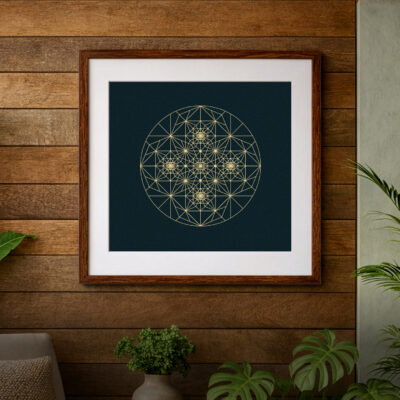
Some contemplative traditions even use sacred geometry as a focal point for meditation. By contemplating geometric forms that echo the harmonic patterns found throughout nature, the mind begins to attune itself to deeper layers of creative intelligence. This relationship between geometry and awareness is explored further in The Geometry of Being and How Life Reflects Art.
Discovering a Deeper Meaning in Life
As meditation deepens, many practitioners discover that the practice extends beyond relaxation or stress relief. It becomes a pathway toward self-understanding and spiritual exploration.
In the quiet space of awareness, questions about purpose, identity, and direction often begin to reveal unexpected clarity. What once appeared fragmented gradually reorganises itself into a more coherent understanding of life.
Meditation invites individuals to step beyond the constant movement of thought and reconnect with a deeper sense of presence. In that presence, a subtle recognition emerges: that meaning is not something to be pursued externally, but something discovered within.
Final Reflections
Meditation is not merely a technique but a way of relating to life. It invites us to slow down, listen more deeply, and rediscover the quiet intelligence that exists beneath the surface of our thoughts.
Whether one approaches meditation for stress relief, emotional balance, improved focus, or spiritual insight, the practice gently guides the mind toward greater harmony. With time, what begins as a daily exercise becomes a new way of seeing the world.
In stillness we begin to recognise a deeper rhythm underlying life itself. Breath becomes an anchor. Awareness becomes spacious. And gradually the mind remembers its natural state of clarity and presence.
Begin simply. A few minutes of quiet observation each day can become the seed of profound transformation.
At Prakasa, many of our designs draw inspiration from the same geometric harmony that contemplative traditions have used for meditation for centuries. Explore the Harmonic Wall Art collection and bring these calming patterns into your own space.
Join the Inner Circle
Enjoyed this article? Join the Inner Circle for more reflections, quiet revelations and early access to new releases.
No spam. Just meaningful updates from Prakasa. By subscribing, you agree to receive occasional emails. You can unsubscribe anytime. Legal Policy.